20 Mar 2012

Playsilks / Svilene marame za igru


Art, creativity, play and toys occupy an important place in Waldorf education.
Waldorf toys are very simple. The simpler the toy - the greater its creative potential: a simple toy provides more opportunities for play in several different ways and for its use in several different ways - and this is one of the most important aspects of creativity.
Waldorf pedagogy in particular insists that the toys are made of natural materials - so they are made of silk, wool, cotton, wood ...

Umetnost, kreativnost, igra i igračke zauzimaju veoma važno mesto u Valdorf pedagogiji.
Valdorf igračke su vrlo jednostavne. Što je igračka jednostavnija, to je njen kreativni potencijal veći: jednostavna igračka pruža više mogućnosti za igranje na više različitih načina i za njenu upotrebu na više različitih načina - a to je jedan od najvažnijih aspekata kreativnosti.
U Valdorf pedagogiji se posebno insistira na tome da igračke budu od prirodnih materijala - pa se za njihovu izradu koriste svila, vuna, pamuk, drvo...


Playsilks are a classic Waldorf "toy". They are beautiful, they nourish the senses and most importantly - encourage hours of open-ended creative play since  they can become anything the child wishes with only a little imagination: a cape, a blanket for the baby, a curtain for the puppet show, a flying carpet, fairy skirt, butterfly wings, a lake or river for paper boats and other small toys ... The possibilities are endless!
Each piece of fabric can be fun to play, but silk is special because of its wonderful shimmery lustre, lightness and transparency. Even babies like to touch silk scarves - and especially love to hide behind them and play peekaboo.

Svilene marame su klasična Valdorf "igračka". Lepe su, neguju čula i najvažnije od svega - podstiču sate kreativne igre "otvorenog tipa" (open-ended creative play) jer mogu postati bilo šta uz samo malo dečje mašte: vitezov plašt, ćebe za bebu, zavesa za pozorište lutaka, leteći ćilim, vilina suknja, leptirova krila, jezero ili reka za papirne čamce i druge male igračke... mogućnosti su nebrojene! Svako parče tkanine može biti zabavno za igru, ali svila je posebna zbog svoje svetlucavosti, lakoće i providnosti. Čak i male bebe vole dodir svilene marame - a posebno vole da se sakrivaju iza njih i igraju pikabu.


When Baby Z was still a baby she loved to take the wipes out of the box, one at a time (until the end) and put them in her mouth. Not very convenient, right? So I made her this "toy":

Kad je Beba Z bila još uvek beba obožavala je da vadi vlažne maramice iz kutije, jednu po jednu (dok ne dođe do kraja) i da ih stavlja u usta (i sisa). Nije baš zgodno, zar ne? Zato sam joj napravila ovu "igračku":


I used this shoe-box with a hole on top of it. I tied a few playsilks together and put them in the box for baby Z to pull them out of the hole - one by one. One by one, until the end.

Upotrebila sam ovu kutiju od cipela sa rupom. Nekoliko svilenih marama sam zavezala jednu za drugu i stavila ih u kutiju za bebu Z da ih izvlači iz kutije jednu po jednu. Jednu po jednu - sve do kraja! 


27 Feb 2012

A Game of Their's Own / Njihova igra


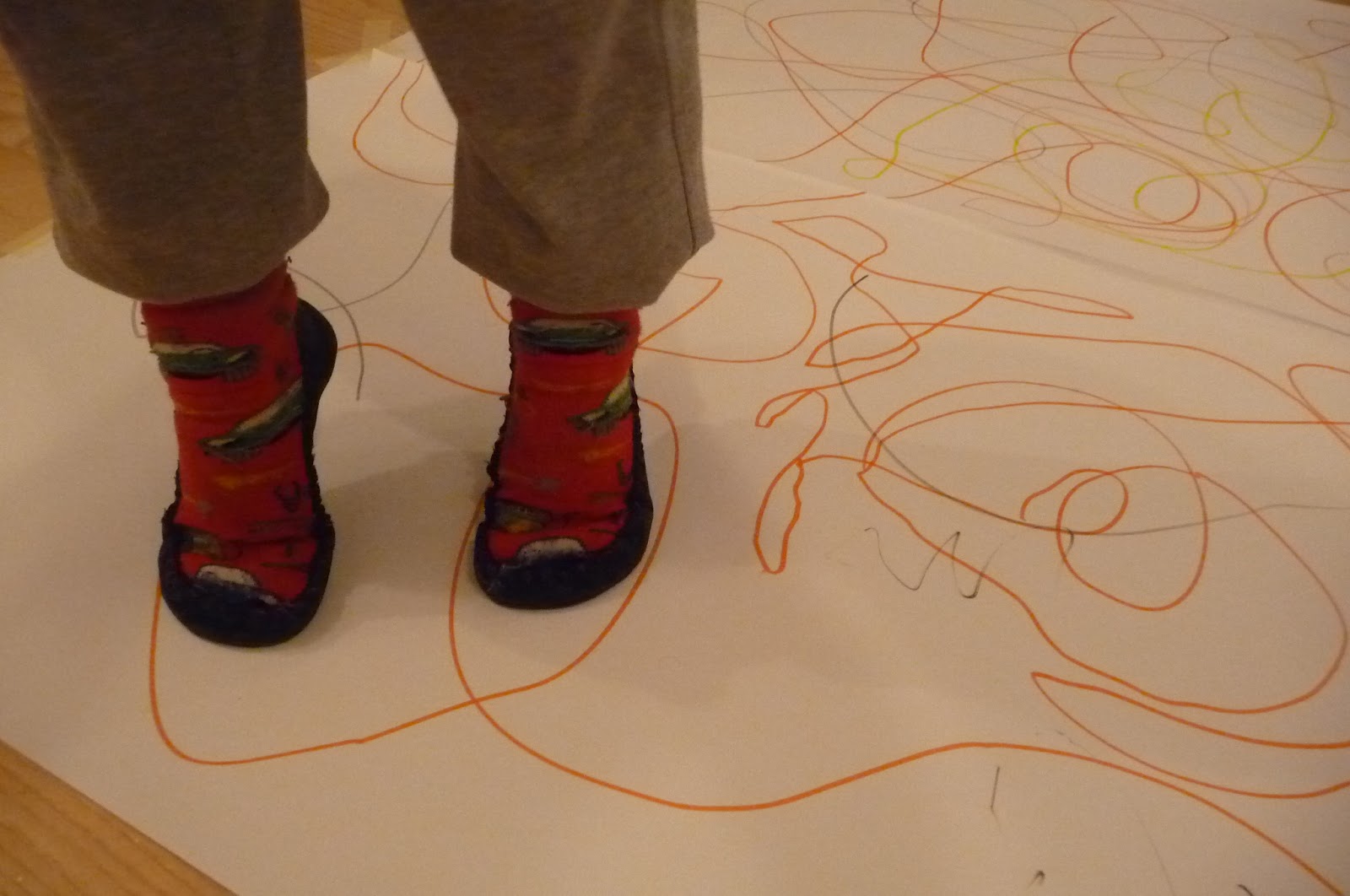
A few days ago V and Baby Z made this big drawing on the floor. It was actually a layout for a game of their own that succeeded.
Pre neki dan V i beba Z su nacrtali veliki crtež na podu. To je zapravo bio poligon za igru koja je usledila, a koju su sami izmislili. 


14 Feb 2012

Igloo / Iglo


Finaly, there is snow. Lots of snow! We have a new igloo on our terrace, but here are some photos from two-years ago when we lived in a house with a backyard. 

Konačno je pao veliki sneg. Na našoj terasi imamo novi iglo, ali ovo su fotografije od pre dve godine, kada smo živeli u kući sa dvorištem. 


3 Feb 2012

What's Wrong with Coloring Books and Cookie-Cutters? / Šta nije u redu sa bojankama i modlama za kolače


I am a strong opponent of coloring books and cookie-cutters! (Although using them can make some really beautiful cookies!) And here's why:
Art and art expression of children and adults are different. While adults'  art is mainly oriented to the final product, children's art, is oriented to the process. Very young children don't care much what their drawing or painting  will look like. Therefore, they are free to experiment and play with different approaches when they create. In this freedom and spontaneity is the charm and beauty of children's creativity. Burden on the finished product, which adults are fond of, is what restrains the free creative process. However, adults often observe and criticize the children's artistic expression from this adult point of view: from the end product - usually meaning - realistic representation. This can cause great harm to children, most in terms of confidence and further desire to create. Even if the child itself did not care for the end-product, constant insistence of adults on it - will make him start seeking it in his drawings.


Ja sam veliki protivnik bojanki i modli za kolače! (iako se pomoću njih mogu napraviti veoma lepi kolači!) A evo i zašto: Likovni izraz i umetnost dece i odraslih se razlikuju. Dok je umetnost odraslih uglavnom orjentisana na krajnji proizvod, umetnost dece je orjentisana na proces. Deci najmlađeg uzrasta nije važno kako će njihov crtež ili slika izgledati. Zbog toga ona slobodno eksperimentišu i poigravaju se različitim pristupima kada stvaraju. U toj slobodi i spontanosti - kojih najčešće nema u kreacijama odraslih - leži čar i lepota dečjeg stvaralaštva. Opterećenost gotovim proizvodom, kojem su odrasli skloni, je ono što sputava slobodni kreativni proces. Međutim, odrasli često posmatraju i kritikuju dečji likovni izraz upravo sa aspekta stvaranja odraslih tj. krajnjeg proizvoda - i to najčešće realističnog prikaza ("da li liči?"). Time nanose deci veliku štetu, najviše u pogledu samopouzdanja i želje za stvaranjem. Jer, ako i nije marilo za krajnji proizvod, stalnim insistiranjem odraslih na njemu - počeće da ga traži u svojim crtežima.


Coloring books are, precisely, such a product of adults that celebrates a realistic depiction and reduce children's art activity to a single "correct" way: neat and precise coloring of a surface inside the given outline - with a strong request not to draw over it! An interesting request for a three-year old for example! It is so obvious that there is no room here for expressive doodles that are so characteristic for kids of this age. Should I mention that the accuracy and precision are not inherent in the visual arts! Think, for example - Jackson Pollock or Van Gogh. How neat and precise are their pictures?
Jean Van't Hul from the blog The Artful Parent writes about the reasons to avoid coloring books for children in her article for Babble and says:
·      Coloring books teach children to be passive about their art. Rather than drawing something themselves, they are coloring in adult-drawn images. What kind of message this sends to children? 

·      Coloring books teach children to compare their art to an adult’s. They teach them that adults draw "better", that children do not know how to draw well, and that they are good enough just to color in other people's drawings. 

·      Coloring books set children up for failure. Coloring books impose a rule to color within the lines - and what if the line is crossed? It is treated as an error and failure. This unapproprieted request for children sets a sense of failure that discourages them for further creation. 

·      Scribbling is linked to future literacy. The more toddlers scribble and draw, the easier it is for them to learn to write later. As toddlers scribble, they learn to make all the shapes necessary to write the alphabet. Coloring inside predetermined lines doesn’t allow this to happen.
·      Coloring books prevent children to present their personal interpreatation of the world.
Similarly, "dot to dot" drawings (in which the child makes a drawing by drawing lines from dot to dot that are marked by numbers), cookie-cutters, sand molds, stamps with cartoon characters and similar 'so called creative' toys - actually have a negative impact on children's artistic expression and should be avoided.


Bojanke su, upravo, takav jedan proizvod odraslih, koji veliča realistički prikaz a likovnu aktivnost dece svodi na jedan jedini "ispravan" način a to je:  uredno i precizno bojenje površine unutar zadatih linija - koje nikako ne bi smelo tom prilikom preći! Zanimljiv zahtev za npr. jednog trogodišnjaka! Ekspresivnom žvrljanju kojem su mnoga deca tog uzrasta sklona - ovde nema mesta. Osim toga, urednost i preciznost uopšte nisu svojstveni likovnoj umetnosti! Setite se npr. Džeksona Poloka ili Van Goga. Koliko su njihove slike uredne i precizne?
Jean Van't Hul sa bloga The Artful Parent u svom članku za Babble piše o razlozima zbog kojih bi trebalo izbegavati bojanke za decu i među njima navodi:
·      Bojanke uče decu da budu pasivna u odnosu na sopstveno stvaralaštvo. Umesto da sama nešto nacrtaju, ona samo boje crteže odraslih. Kakvu poruku ovo šalje deci?
·      Bojanke uče decu da stalno porede svoje crteže sa crtežima odraslih. Uče ih da odrasli crtaju "bolje", a da deca ne umeju da crtaju, te da su dovoljno dobra samo da oboje tuđe crteže.
·      Bojanke nameću pravilo da se boji unutar linija - a šta kada se linija pređe? To se tretira kao greška. U startu se pred decu stavlja zahtev koji ne mogu izvršiti, i to kod dece izaziva osećaj neuspešnosti koji ih demotiviše za dalje stvaranje.
·      Žvrljanje priprema decu i za pisanje. Žvrljajući deca spontano proizvode i uče sve pokrete i oblike koji su neophodni kasnije za pisanje slova. Bojenje unutar zadatih linija to ne omogućava.
·      Bojanke onemogućavaju decu da prikažu svoju ličnu interpreatciju sveta. Bojanke su interpreatcije sveta odraslih i zato su one prepreka likovnom razvoju.
Na sličan način crteži tipa "tačka po tačka" (u kojem dete izrađuje crtež povlačeći linije od tačke do tačke koje su obeležene brojevima), modle za kolače, kalupi za pesak, pečati sa likovima iz crtanih filmova i slični "kreativni" proizvodi - zapravo loše utiču na dečji likovni izraz i trebalo bi ih izbegavati.


However, I think that one should not make too much drama out of the whole thing, and in order to avoid a counter-effect and longing - which bans of any kind can produce - I allow our winter cookie-cutters to periodically visit our kitchen. If those are not offered to children as the only form of creation, but only occasionally and in special circumstances, then, I guess they can't be so harmful. Or am I wrong?


Međutim, ne treba praviti ni preveliku dramu od cele stvari, i da bih izbegla kontra-efekat i čežnju, koju zabrane svake vrste mogu da proizvedu, dopuštam  našim zimskim modlama za kolače da povremeno posete našu kuhinju. Ukoliko se one ne nude deci kao jedini vid stvaranja, već samo ponekad i u posebnim prilikama, onda, pretpostavljam da ne mogu biti toliko štetne.  Ili grešim?


13 Jan 2012

Cookies for Santa / Keksići za Deda Mraza


Every New Year Eve we make cookies and tea for Santa. We leave them by the tree so he can have a snack and warm up a little bit when he brings the presents to our home. 
These are our "Octopus" cookies that never become octopuses with some powdered sugar icing (1 cup powdered sugar, 1 tablespoon milk or water, 1/2 teaspoon vanilla).
This time, we used some cookie cutters and I also cut out some shapes with the knife. 
V helped me make the dough and cut the shapes with the cookie cutters, but he didn't want to draw on them with the icing, so I did it myself. I usually avoid drawing myself in front of V, since that can discourage his drawing, but this time of year, with all the lights and glitter, I just couldn't resist!
They came out nice, and I am sure Santa liked them a lot! But!
There is a "But!" here, that I shall write about in my next post!
Happy New Year!


Svakog 31. decembra popodne pravimo kolače i čaj za Deda Mraza. Ostavljamo ih pored jelke  tako da Deda Mraz može malo da se zasladi i ugreje kad donese poklone u naš dom.   To su naši  kolači-Hobotnice koji nikada ne postanu hobotnice sa belom šećernom glazurom (1 čaša šećera u prahu, 1 kašika mleka ili vode, 1 / 2 kašičice vanile). Ovaj put smo koristili modle za kolače, a neke oblike sam isekla nožem. V mi je pomogao da napravim testo i da izrežem kolače modlama, ali nije želeo da ih iscrtava belom glazurom, tako da sam to sama uradila. Obično izbegavam da crtam pred V-om, jer to može da obeshrabri njegovo crtanje, ali u ovo doba godine, sa svim svetlima i sjajem, nisam mogla da odolim! Kolači su ispali lepo, i sigurna sam da su se svideli Deda Mrazu. Ali! 
Ovde postoji jedno "Ali!", ali o njemu ću pisati u sledećem postu! 
Srećna Nova godina!